Canvas:
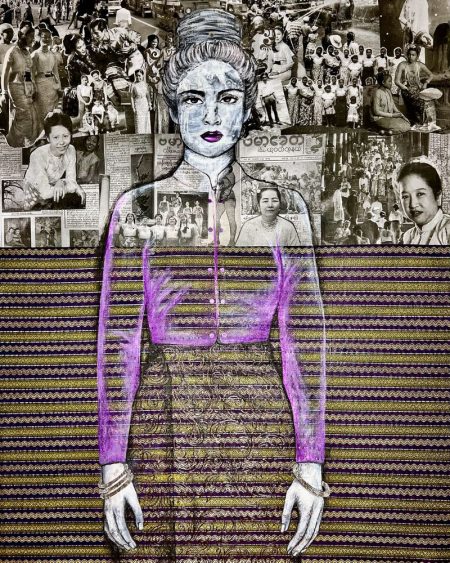
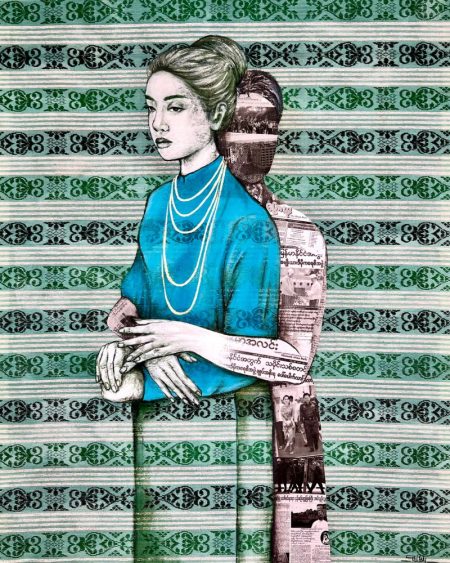
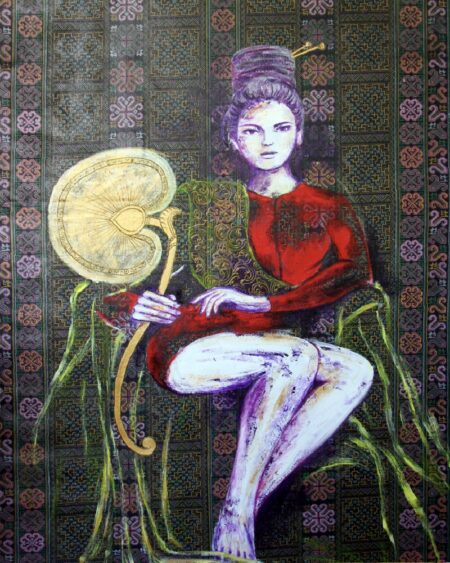
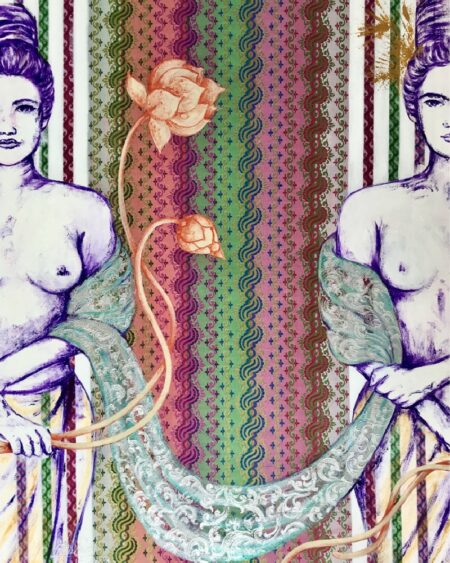
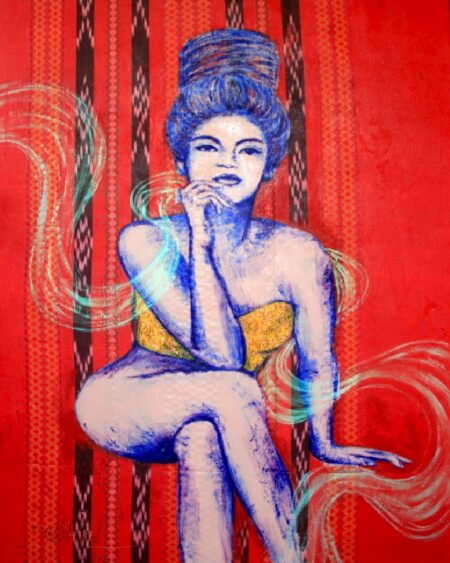
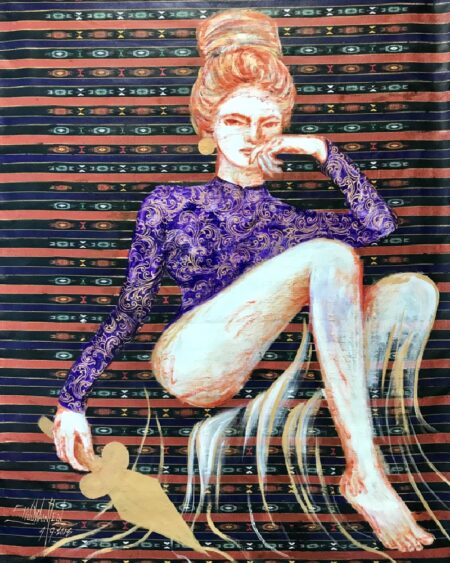
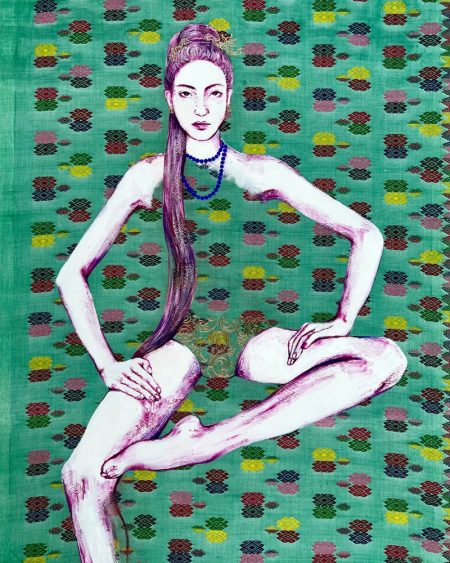
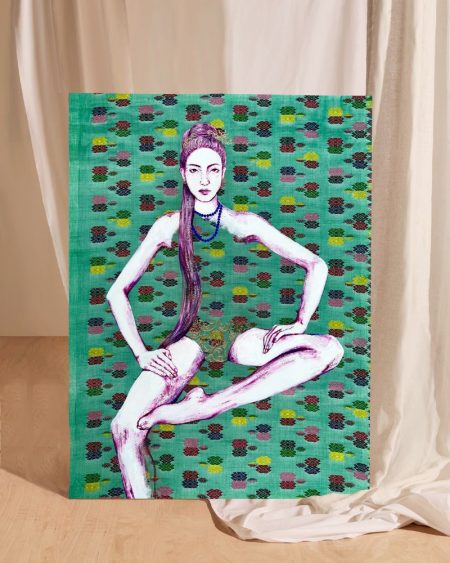
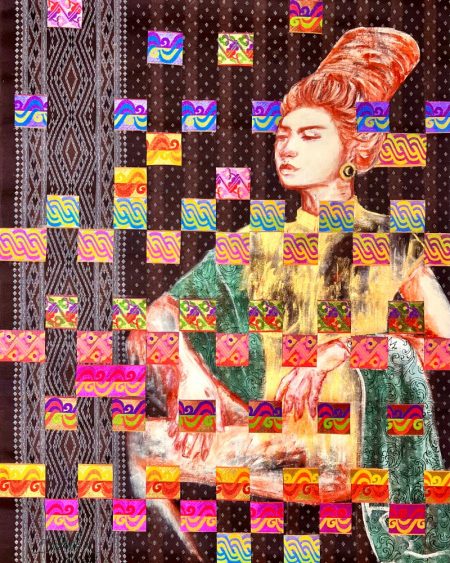
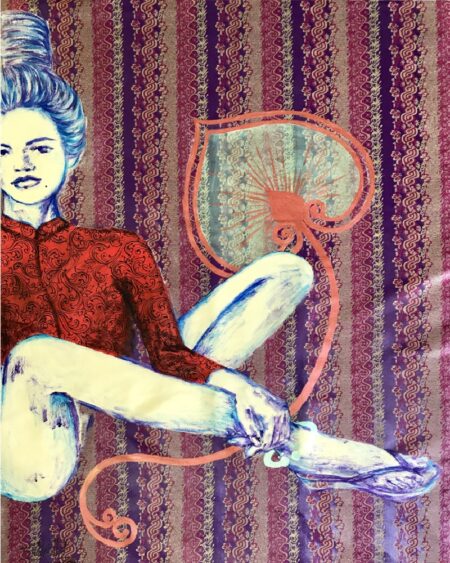
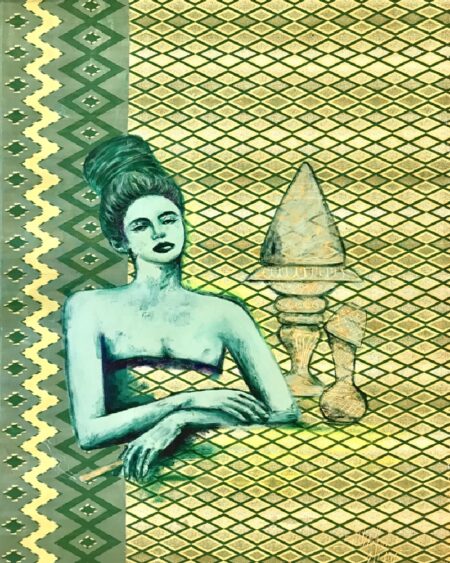
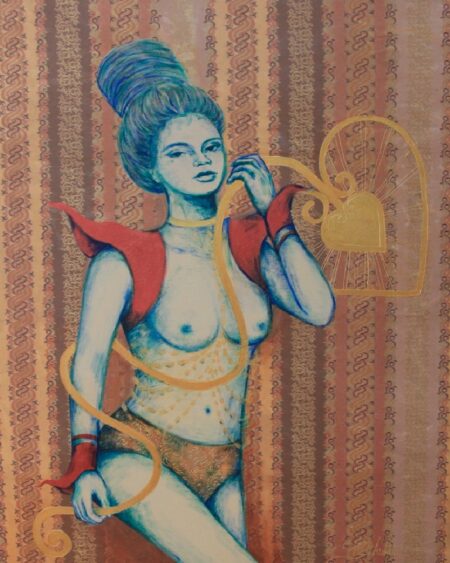
This work is created on traditional Myanmar hand-woven fabric, referencing the htamain—a women’s long skirt deeply embedded in Burmese cultural belief systems. Historically viewed as impure or unlucky within patriarchal norms, the fabric carries layered meanings of control, stigma, and resistance.
Technique:
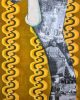
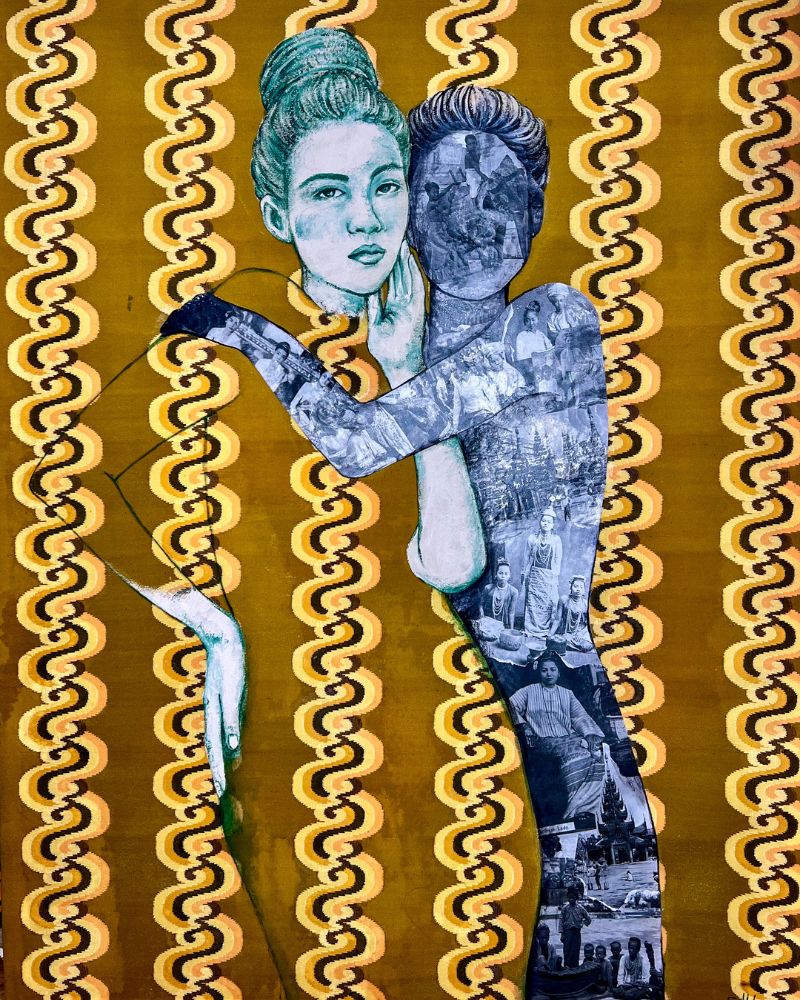
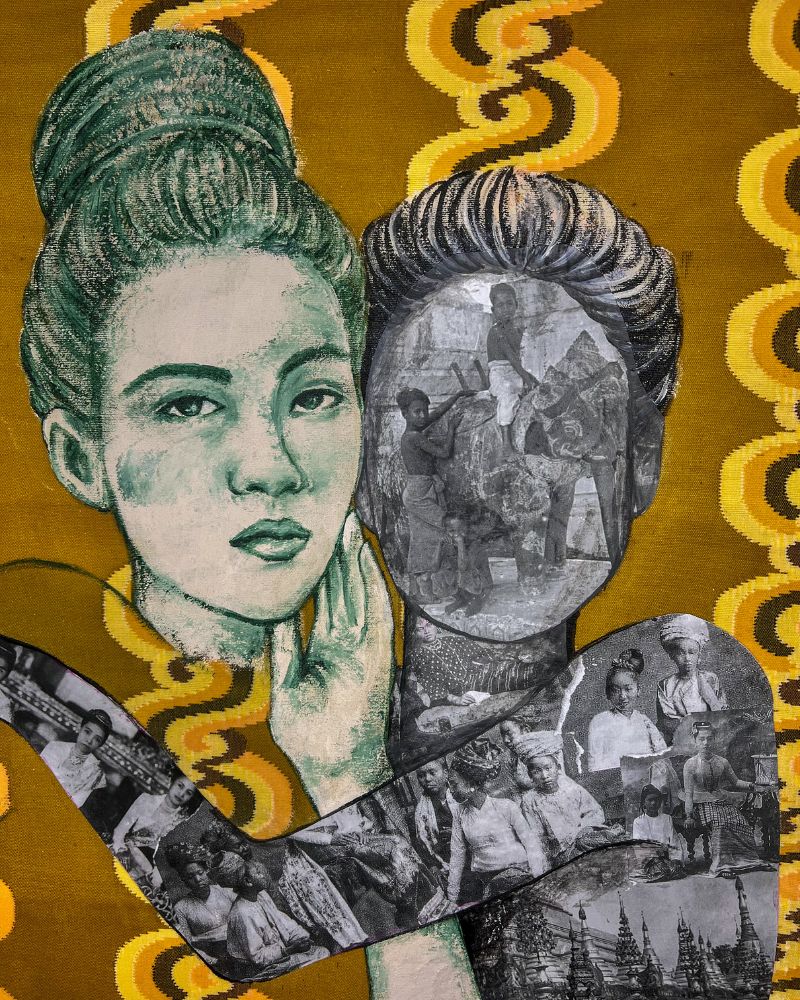
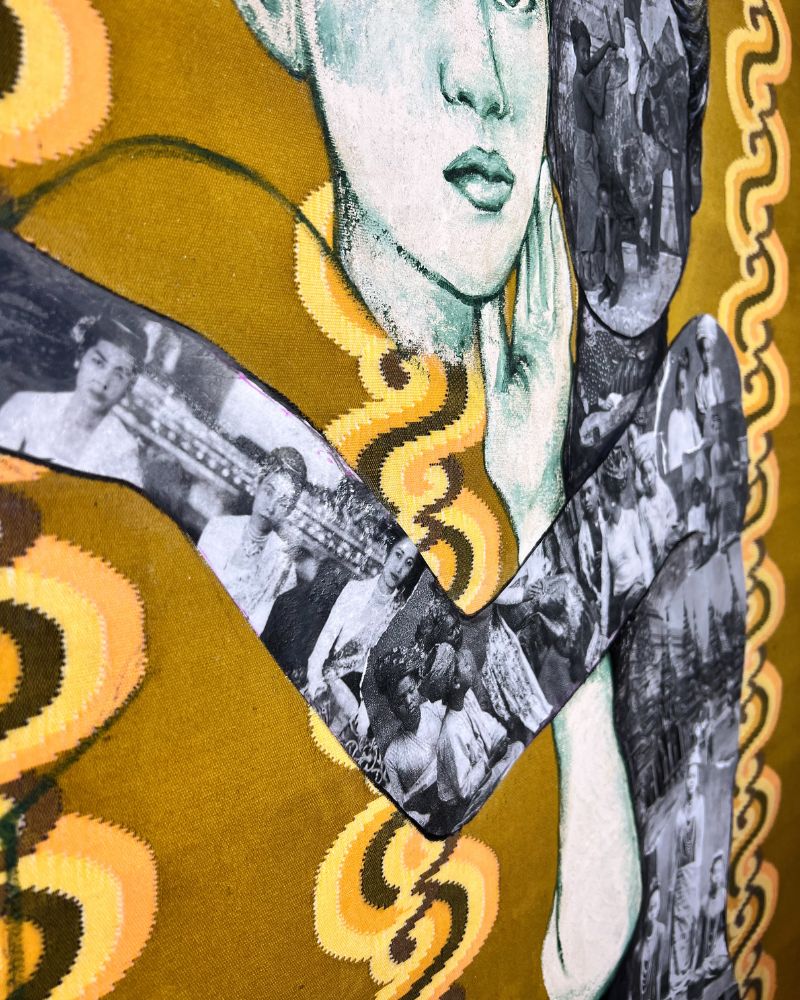
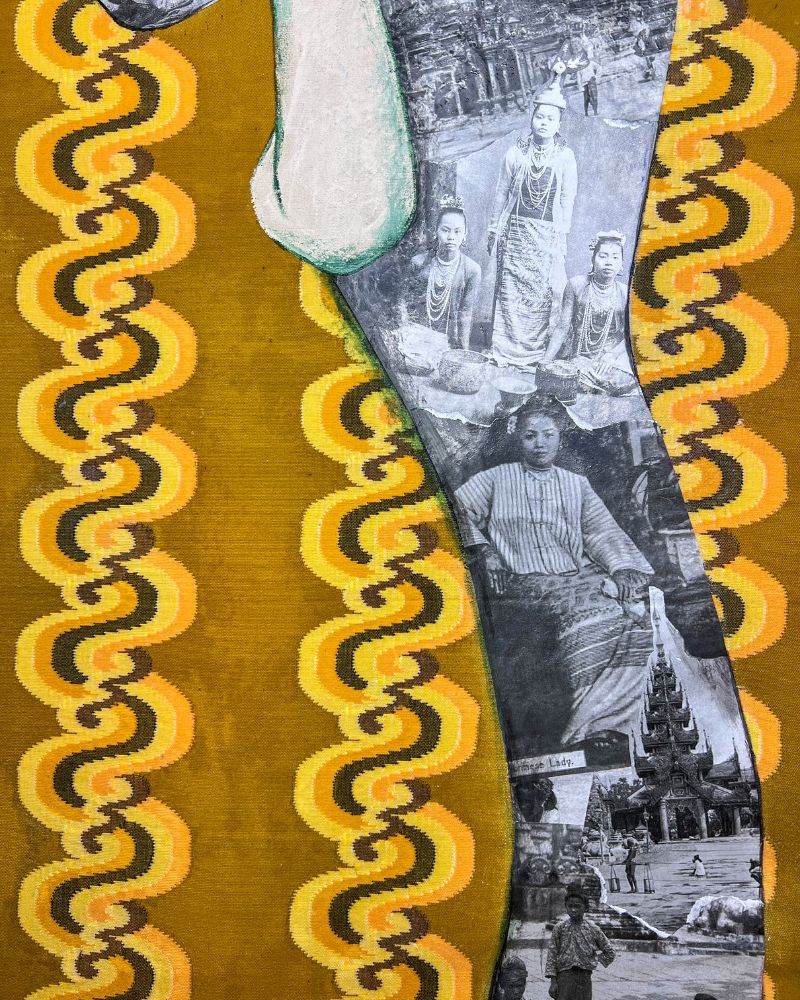
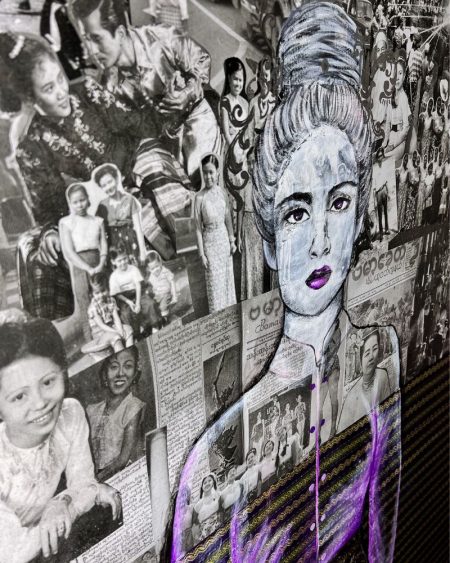
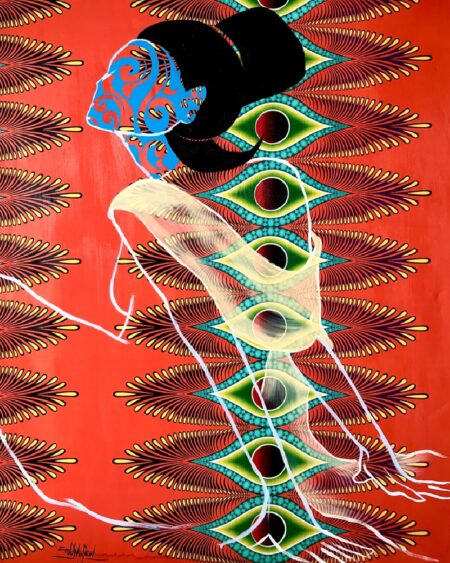
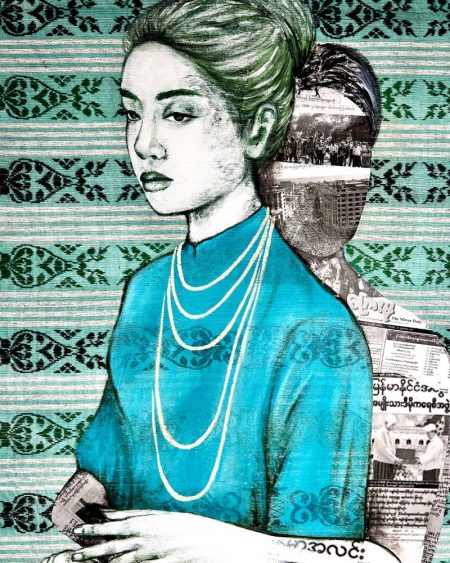
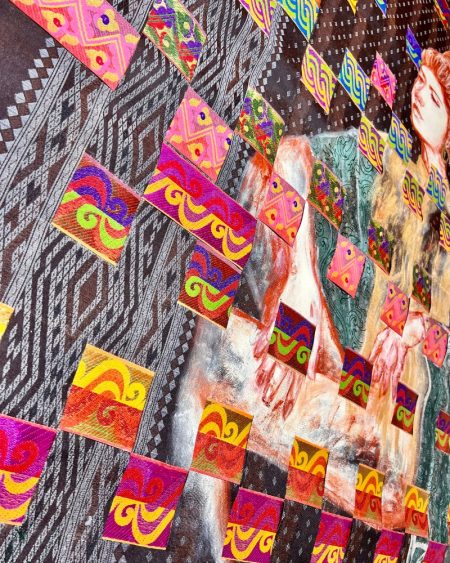
Acrylic painting is combined with photographic collage directly on the woven textile. The fabric’s repeating patterns remain visible beneath the surface, interacting with the painted figures and collaged imagery. The figures appear partially absorbed into the textile, blurring the boundary between body, memory, and material.
Process:
The work develops through layering—both materially and conceptually. By merging fabric, paint, and archival imagery, the process reflects how personal identity and political history become entangled, consumed, and reshaped under systems of power.
Artwork Description:
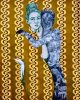
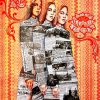
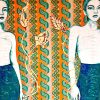
Chew You Up or Spit You Out explores the tension between vulnerability and survival within structures that demand submission or erasure. Two female figures merge into a single form: one rendered through paint, the other constructed from newspaper imagery. Their bodies overlap and interlock, suggesting intimacy, protection, and conflict, while also evoking the fragmentation caused by war, displacement, and political pressure.
The patterned background fabric recalls traditional htamain textiles. Once associated with taboo and restriction, this fabric became an unexpected tool of resistance in the aftermath of Myanmar’s 2021 military coup, when women hung their skirts across streets to block soldiers—transforming superstition into defiance. While the work does not depict protest directly, it carries the emotional residue of that gesture.
The collaged figure, composed of newsprint and historical fragments, reflects how women’s bodies are often consumed by narratives of conflict—documented, politicized, and reduced to symbols. In contrast, the painted figure resists total absorption, holding space for agency and selfhood.
Rather than illustrating violence explicitly, the work approaches war and oppression through metaphor—asking whether individuals are shaped by these forces, consumed by them, or able to endure without surrendering their inner core. The title remains both a threat and a question, deliberately left unresolved.