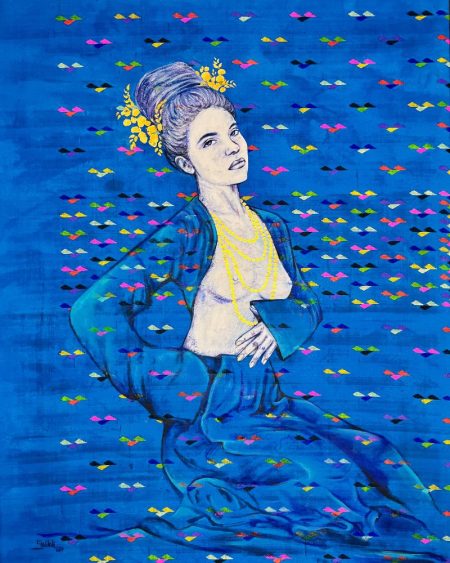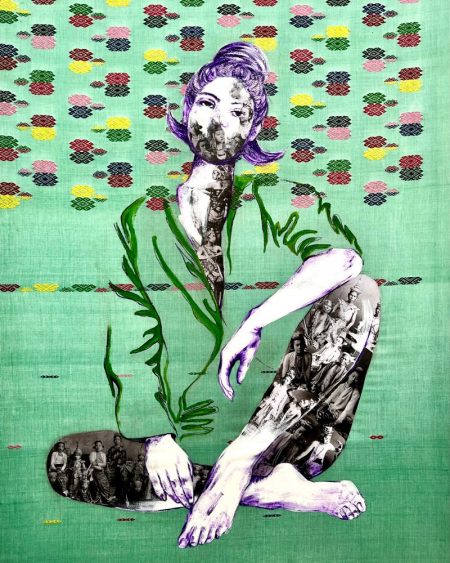



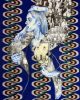



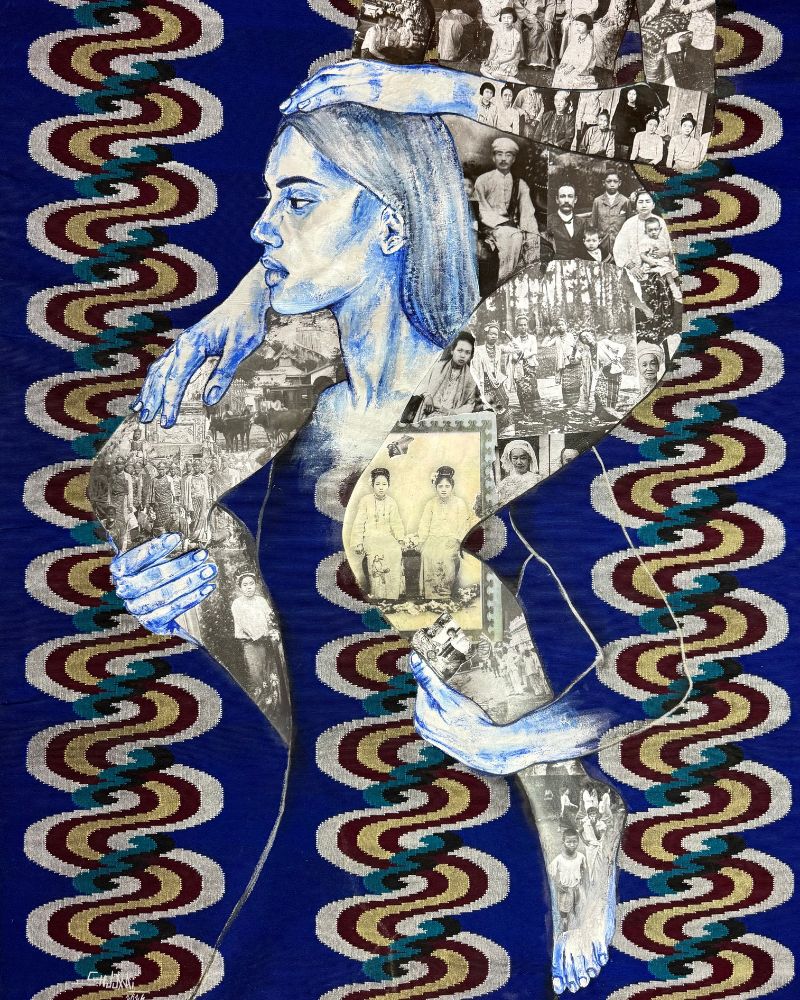
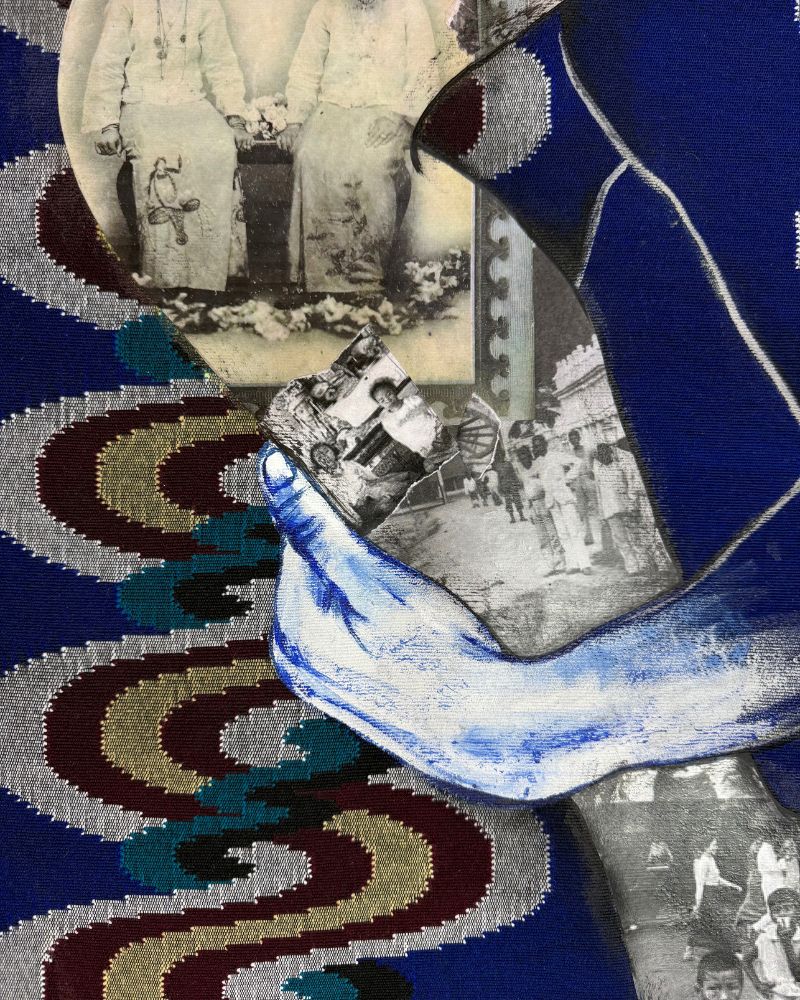
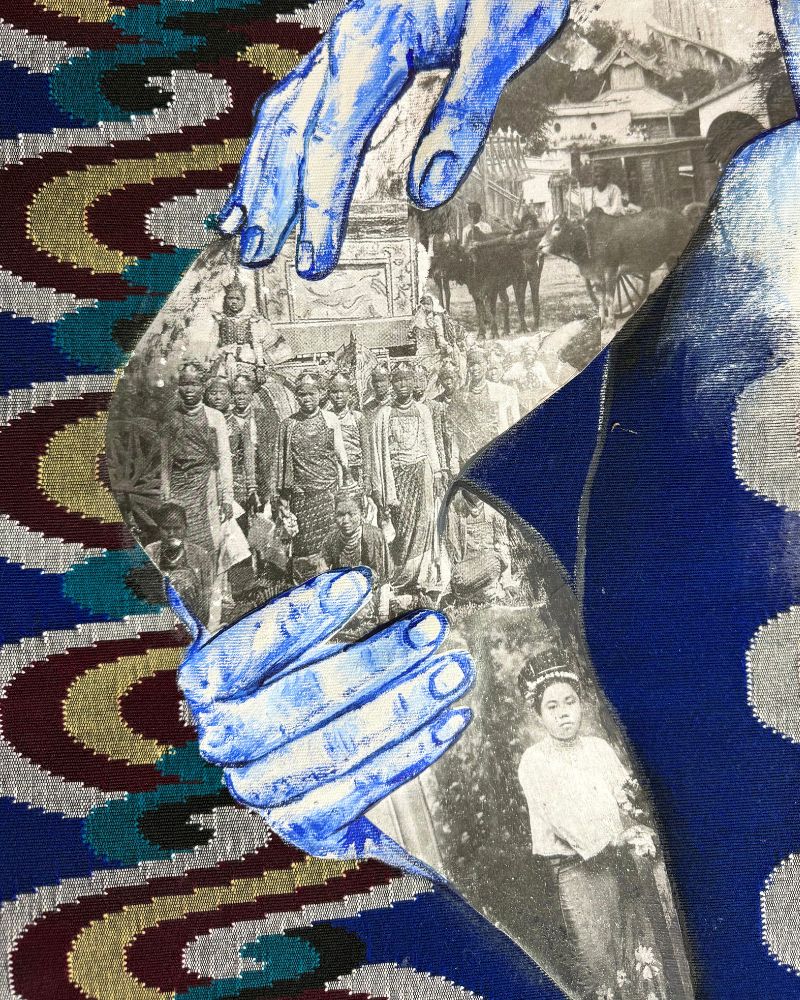
WHERE HER NAME ONCE LIVED

2025
Acrylic and collage on Myanmar fabric
121 × 91 cm (48 × 36 inches)

Signed front left

Compare

Canvas:
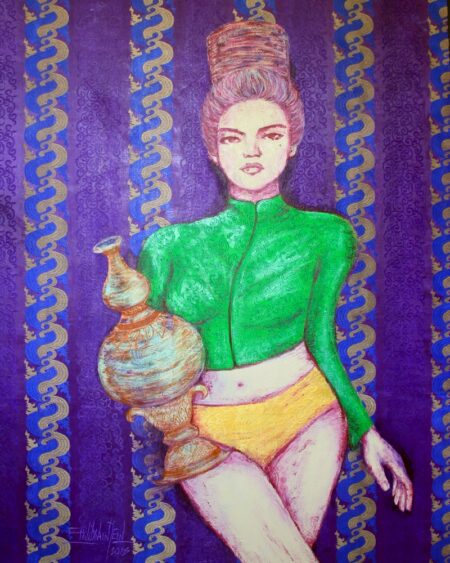
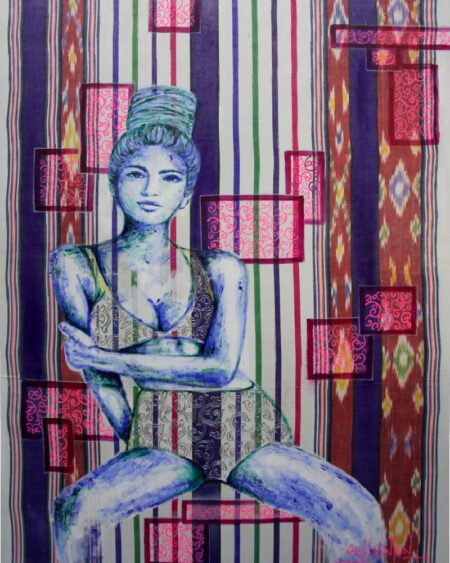
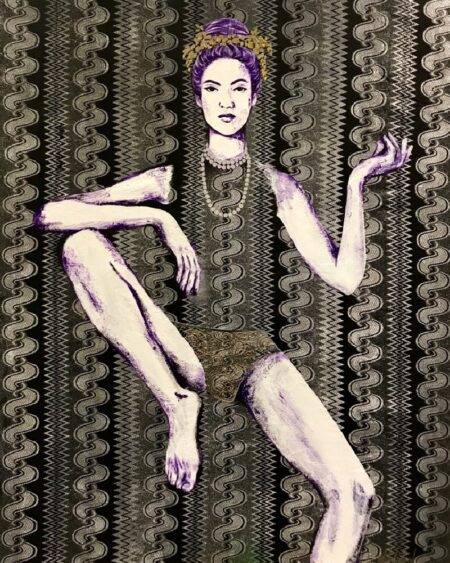
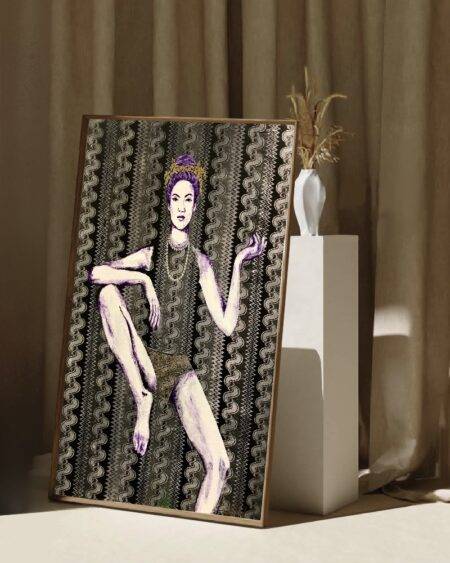
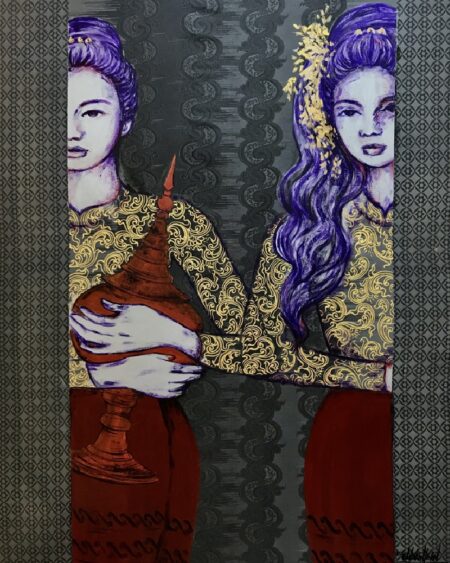
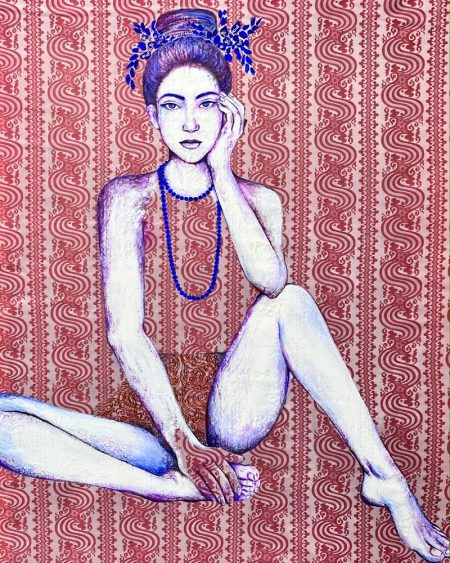
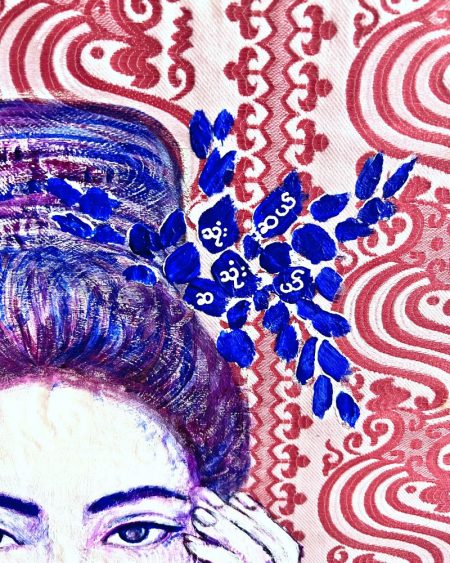
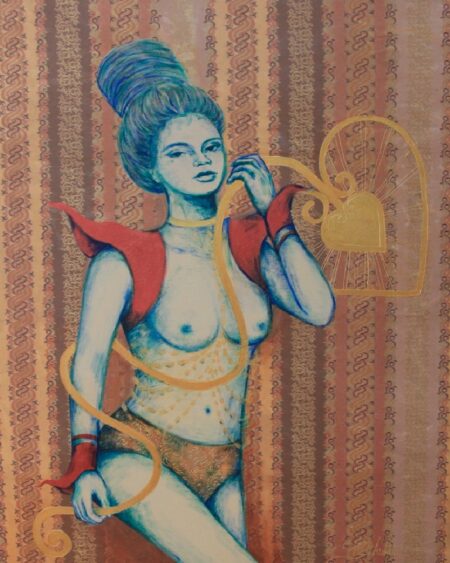
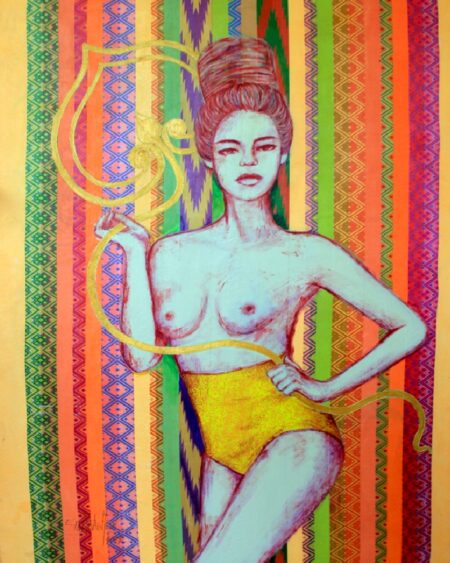
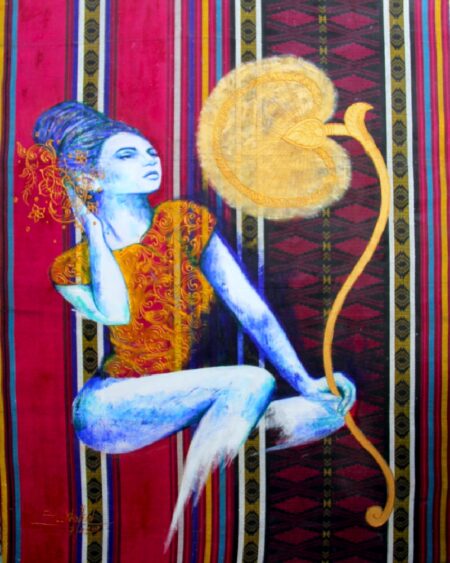
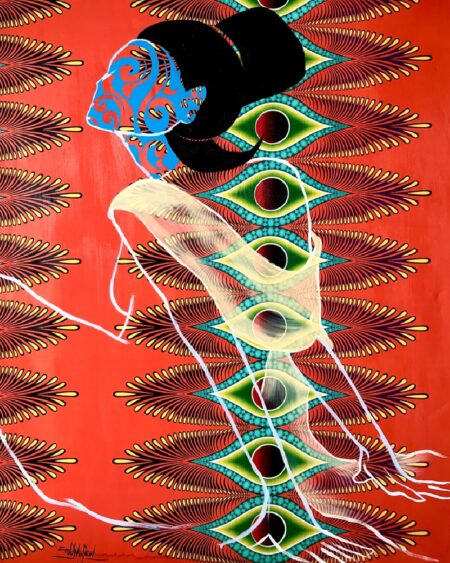
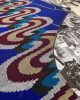
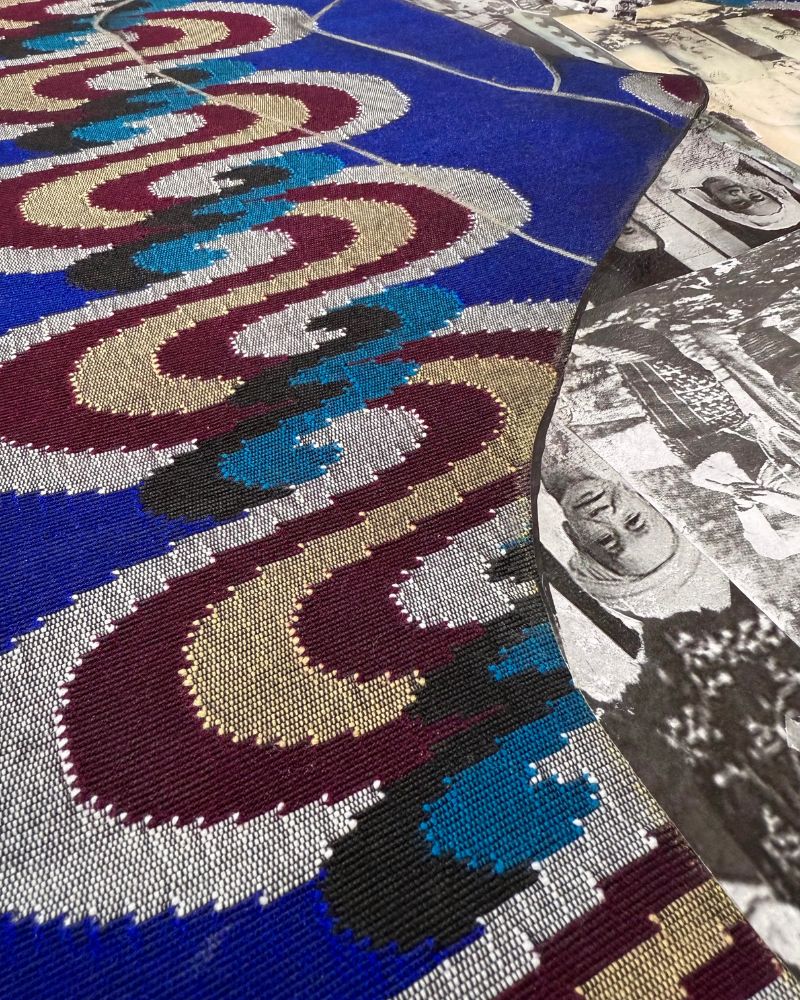
The work is painted on hand-selected, hand-woven Myanmar fabric featuring a traditional A-cheik pattern. The blue textile carries cultural associations with continuity, rhythm, and belonging. As a material shaped by daily use and inherited craft, the fabric functions as both surface and memory, holding traces of history before any image is formed.

Technique:
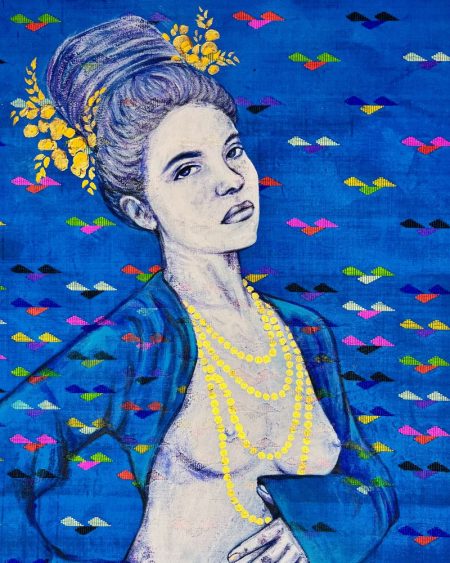
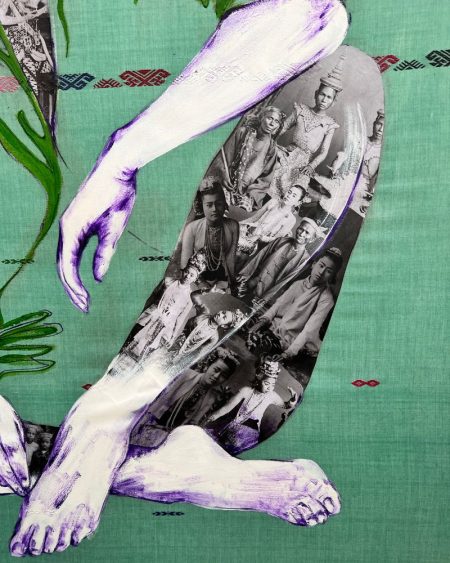
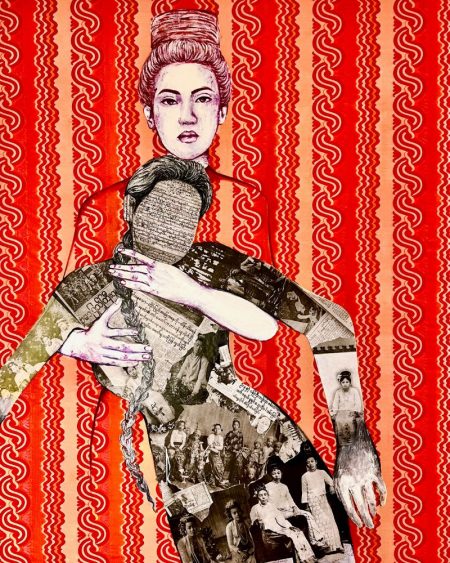
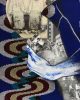
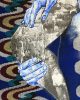
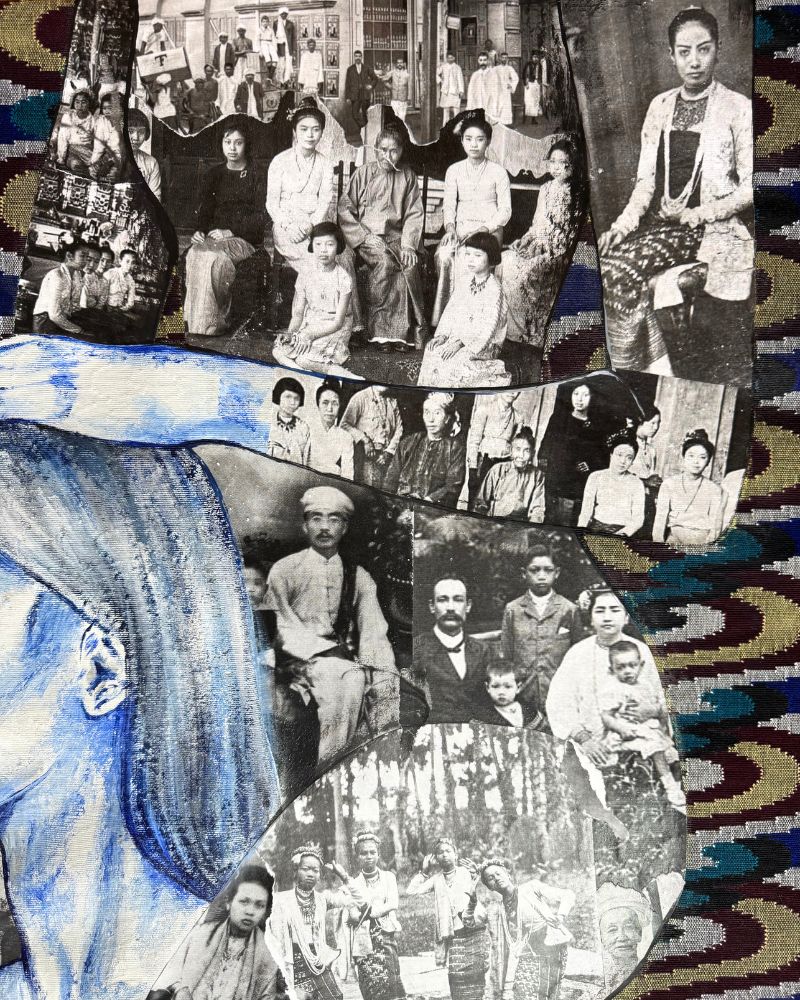
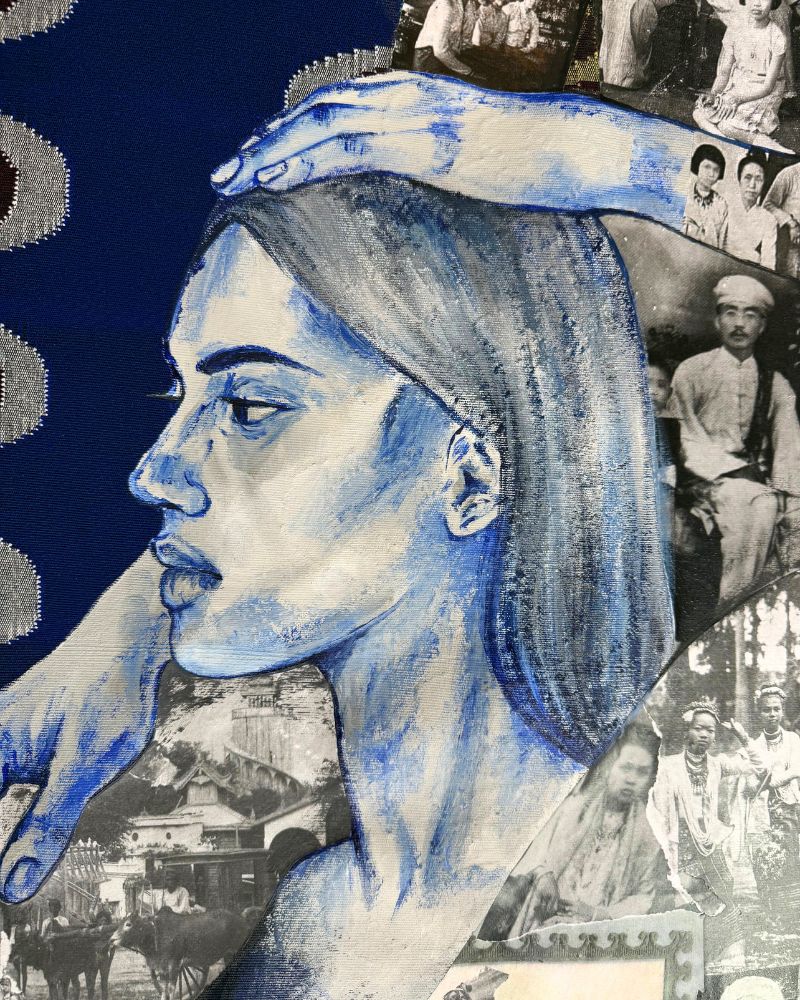
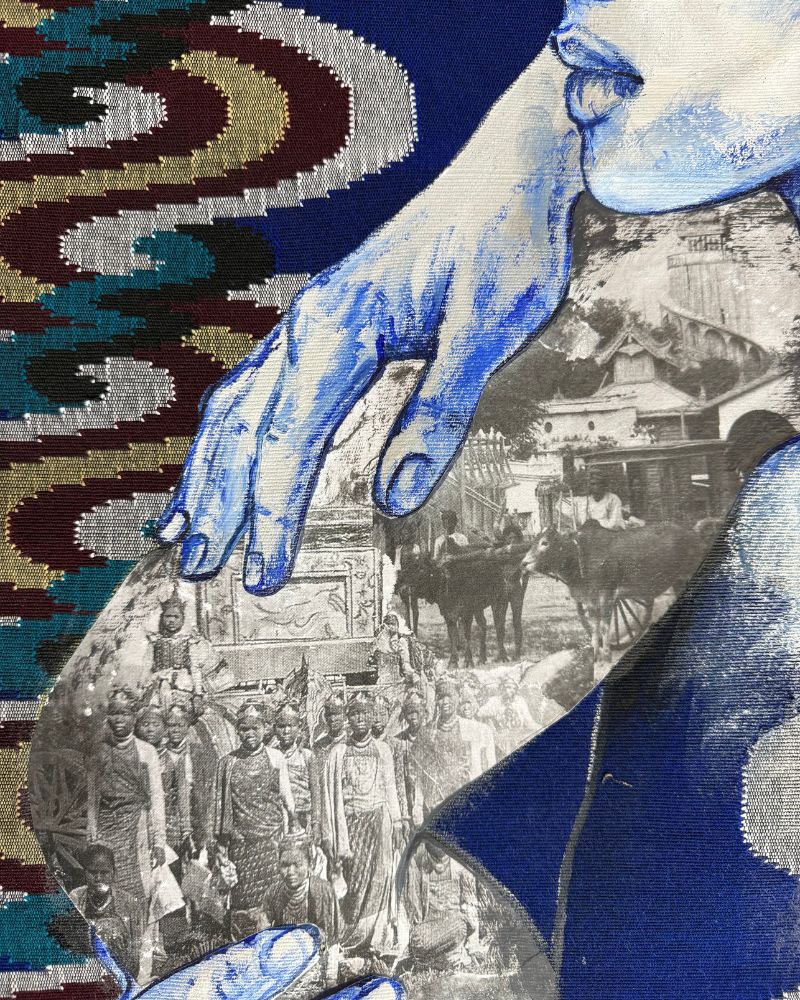
Acrylic paint is applied directly onto the woven fabric, allowing the pigment to interact with the textile rather than obscure it. The figure is constructed through softened silhouette lines that merge with the patterned background. Collage elements made from vintage photographic material are layered into the surface and integrated with paint, creating a seamless relationship between image, fabric, and gesture.

Process:
The work develops through a slow layering process. The textile is first engaged as an active ground, followed by the gradual formation of the figure. Archival photographs are selected, fragmented, and assembled over time, emphasizing accumulation rather than singular representation. Repeated applications of paint bind the layers together, allowing forms to appear, dissolve, and stabilize. This method reflects how memory is carried—unevenly, persistently, and through continuous negotiation.

Artwork Description:
Where Her Name Once Lived reflects on the fragile space between presence and erasure. The work considers how identities are absorbed into collective histories, where names once spoken gradually fade under layers of memory, responsibility, and silence. It speaks to lives that continue to carry meaning even when individual recognition disappears.

The title frames absence not as loss alone, but as a condition shaped by time, power, and survival. Names are overwritten not because they lack value, but because systems—social, political, and cultural—decide which histories remain visible. Within this space, endurance becomes a form of strength, sustained quietly rather than performed.

Rather than offering closure, the work remains with tension. It acknowledges how memory is carried forward through care, obligation, and persistence, often without language or acknowledgment. What remains is not a fixed identity, but a continuing presence—held, supported, and passed on even as names dissolve into the fabric of collective experience.

Category:
Viewed
Chuu Wai
Close

My Cart

Close

Wishlist

Recently Viewed

Close

Great to see you here !

A password will be sent to your email address.

Your personal data will be used to support your experience throughout this website, to manage access to your account, and for other purposes described in our privacy policy.

Already got an account?

Close

Categories

Select at least 2 products
to compare